Why we use cookies and other tracking technologies?
Our site enables script (e.g. cookies) that is able to read, store, and write information on your browser and in your device. The information processed by this script includes data relating to you which may include personal identifiers (e.g. IP address and session details) and browsing activity. We use this information for various purposes - e.g. to deliver content, maintain security, enable user choice, improve our sites, and for marketing purposes. You can reject all non-essential processing by choosing to accept only necessary cookies. Cookie policy.
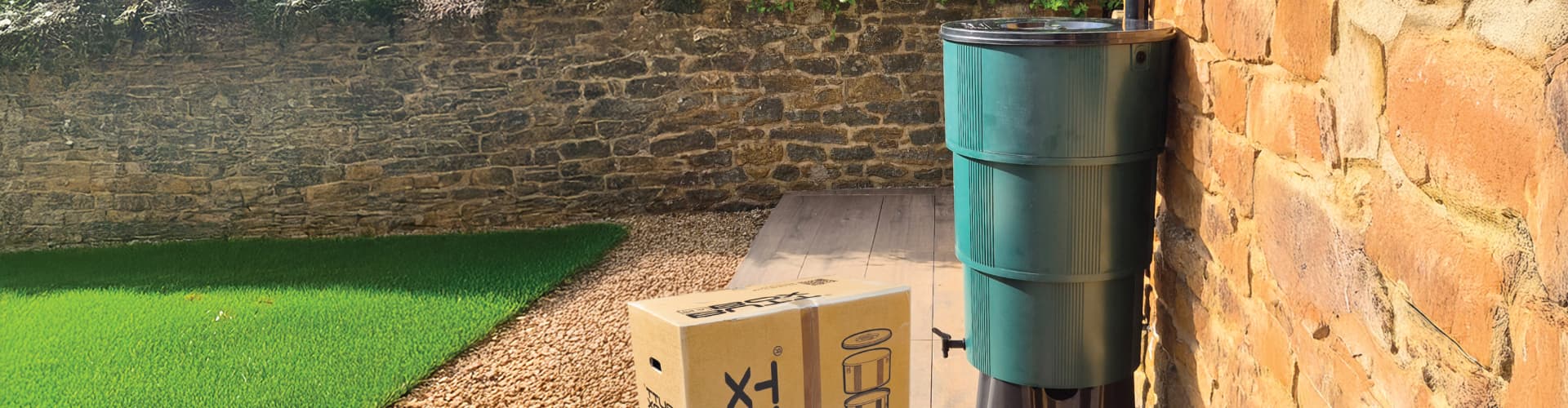
Increase Your Savings with a Water Butt
S
Written bySave Water Save Money
Published on
Every time rain falls on your roof, thousands of litres of usable water flow straight down the drain. For metered households, utilising that water to wash cars, water gardens, or for general outdoor maintenance can quickly lower your metered water charges while reducing your reliance on tap water.
Installing a water butt is one of the easiest ways to capture free rainwater, offering a quick return on investment and long-term savings. Here is a clear look at how much money you can actually save, how quickly a water butt pays for itself, and how to start harvesting free water for your home.
Financial Savings
For UK households, using tap water outdoors is an unnecessary expense. A water butt collects free rainwater, turning downpours into direct savings on your bills!
For Water-Metered Households
If your home has a water meter, you are paying for both the clean water supply coming into your home and wastewater sewerage. As water companies calculate sewerage fees based on your metered supply, every litre of tap water you save outdoors can reduce your utility bill, something that is important for households looking to save on water bills and costs.
A standard UK household uses between 5,000 and 10,000 litres of outdoor water annually, and using a water butt for routine outdoor use typically saves between £30 and £60.
Initial Costs and Long-Term Savings
A water butt is an affordable and straightforward investment that pays for itself over time.
With average UK rainfall, a standard 200L water butt is filled and emptied roughly 15 to 20 times a year—harvesting around 3,600 litres (3.6 m³) of free rainwater. At current UK metered rates of £3.00 to £4.00 per m³, that translates to an annual saving of £11 to £15.
At Save Water Save Money, we offer water butt kits ranging from 100L to 227L capacities, generally costing between £39.49 and £65. Thanks to these low setup fees, most households reach their break-even point in under 12 to 18 months, after which every drop of harvested rainwater is completely free!
For Unmetered Households
A waterbutt provides key practical advantages such as being a reliable backup water source during dry summer periods. Additionally, natural rainwater has lower pH levels, making it better for plant growth than treated tap water.
How Much Water Can You Harvest?
For a typical UK home with a 50-square-metre roof, 25 millimetres of rainfall captures approximately 1250 litres of water. How much water you actually capture depends on several key factors:
Local Weather: Western regions of the UK such as Glasgow, Plymouth and Cardiff receive higher levels of annual rainfall, meaning residents living in those cities have even greater opportunities for rainwater harvesting.
Roof Size: Larger roofs catch more rain, while non-porous roof materials such as metal, plastic, or slate tiles ensure efficient run-off with minimal water loss to absorption.
Storage Capacity: The size of your water butt determines how much water you can retain during heavy downpours without losing excess to overflow.
System Maintenance: Keeping gutters and downpipe diverters clear of leaves ensures maximum rainwater flow into your water butt. It is recommended to clear your gutters and downpipes in late autumn (November to early December) before winter rain hits.
Installing a water butt is a simple DIY job that requires basic tools and can be completed in 3 quick steps:
Choosing a Suitable Location
Pick a downpipe connected to your house, garage, or shed roof. Ensure the ground beneath it is completely flat and sturdy enough to support the full weight of the container (keeping in mind that once the water butt has water in it, it will be much heavier). Place the unit as close to the downpipe as possible.
Installing a Rain Diverter
Cut and remove a 30mm section from the downpipe using a hacksaw and slot in a drain downpipe water butt diverter kit. The diverter automatically channels rainwater that falls on your roof into the water butt and also directs overflow back into the drainpipe once full. Make sure the diverter is set as close to the same level as the lid of the butt. If it's positioned too high, your butt may overflow, and if it's lower than the lid, it won't capture rainwater efficiently from the downpipe.
Connect the Hose
Fit the diverter unit securely into the cut section of the downpipe. Attach the connecting hose to the diverter outlet and fix the opposite end to your water butt inlet, then secure the lid on top. Your water butt is now successfully connected to your downpipe and gutter system, so you can collect rainwater from your roof that would otherwise be wasted.
Start Saving Water and Money Today!
Installing a water butt is one of the most time- and cost-efficient ways to lower your household water usage and bills. By capturing rainwater for outdoor use, it frees up treated tap water for essential indoor needs while reducing annual water and sewerage charges. With low setup costs and a fast payback period, a water butt quickly pays for itself while delivering a reliable, long-term supply of water for your home and garden.
Ready to install your water butt? Explore our range of water butt kits or contact us today to learn more.